
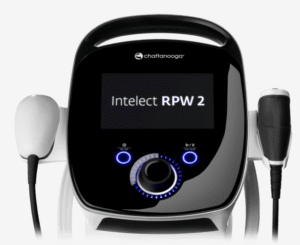
At Pro-Motion Physical Therapy, we embrace innovative techniques to help our patients achieve their health, fitness, and functional goals. One advanced treatment option we offer is the Chattanooga Radial Pressure Wave Therapy, often referred to as RPW or radial shockwave therapy.
Radial Pressure Wave Therapy is a non-invasive treatment that uses acoustic pressure waves to stimulate a healing response painful or chronically irritated tissues. It can be especially helpful for stubborn tendon, fascia, muscle, and soft-tissue conditions that have not responded well to rest, stretching, exercise, medication, or traditional care alone.
At Pro-Motion, we use RPW as part of a complete rehabilitation plan to help reduce pain, improve tissue tolerance, restore movement, and help patients return to the activities they want, need, and love to do.
What Is Radial Pressure Wave Therapy?
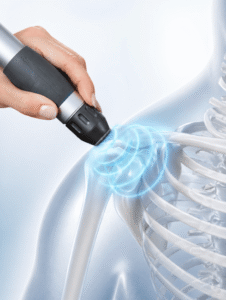
Radial Pressure Wave Therapy uses high-energy acoustic pulses delivered through a handpiece to the surface of the skin. These pressure waves spread into the tissues beneath the treatment area.
Unlike surgery or injections, RPW does not cut the skin or place medication into the body. Instead, it delivers mechanical energy into targeted tissues to help stimulate a biological response.
The Chattanooga RPW system uses compressed-air technology to generate pressure waves that are transferred through an applicator into the tissue. These waves create a controlled mechanical stimulus that may help reduce pain, improve local circulation, and activate connective tissue responses.
How Does Radial Pressure Wave Therapy Work?
Radial Pressure Wave Therapy works by delivering repeated mechanical pressure waves into painful or restricted tissues. This controlled mechanical stimulation may help “wake up” tissues that are stuck in a painful, irritated, or under-healing state.
The pressure waves may help support several helpful physiological responses:
Pain Modulation: RPW may help reduce pain sensitivity by stimulating local nerve pathways and changing how irritated tissues send pain signals.
Improved Local Circulation: RPW may temporarily increase blood flow in the treated area, helping bring oxygen and nutrients to tissues involved in repair.
Connective Tissue Activation: Tendons, fascia, ligaments, and other connective tissues respond to mechanical load. RPW provides a controlled mechanical stimulus that may help promote tissue remodeling and improved tolerance to loading.
Stimulation of Healing Signals: Mechanical pressure waves may help encourage cellular signaling involved in tissue repair, collagen remodeling, and growth-factor-related activity.
Reduced Muscle Guarding: RPW can help address painful muscle tension, myofascial trigger points, and protective guarding that limit movement.
In simple terms, Radial Pressure Wave Therapy does not “break up scar tissue” or magically heal tissue by itself. Instead, it provides a targeted mechanical stimulus that may help restart a healthier repair and remodeling response.
How RPW Can Help Identify Irritated Tissue
One unique benefit of Radial Pressure Wave Therapy is that it can help your therapist better identify the tissue that is irritated or sensitive.
Pain is not always felt exactly where the problem begins. Sometimes a patient may describe pain in one general area, but the involved tendon, fascia, muscle, or connective tissue is slightly above, below, or around that spot. As the pressure waves move through the tissue, they often reproduce the patient’s familiar symptoms when they pass through the irritated region.
This response can help your therapist locate the most sensitive or involved tissue and better direct treatment. In this way, RPW is not only a treatment tool — it can also be a helpful clinical guide. It helps us ask: Which tissue is actually complaining? Which area needs to calm down, remodel, and regain tolerance to movement?
Why Mechanical Stimulation Matters
Many stubborn musculoskeletal problems are not simply “inflamed.” Some tissues become painful because they are poorly loaded, sensitized, stiff, or unable to tolerate normal activity.
Radial Pressure Wave Therapy gives the tissue a controlled mechanical challenge. This can help create a better environment for healing by improving circulation, decreasing pain sensitivity, and preparing the area for progressive movement and strengthening.
At Pro-Motion Physical Therapy, we see RPW as a way to help move tissues from a stuck and sensitive state toward a more adaptive and responsive state.
When to Use Radial Pressure Wave Therapy
Radial Pressure Wave Therapy is not a replacement for exercise, movement retraining, or functional rehabilitation. It is a complementary tool that can help reduce pain and improve tissue tolerance so patients can participate more effectively in therapy.
It may be helpful for:
Plantar Fasciitis / Heel Pain: To help reduce pain and stimulate irritated fascia near the heel.
Achilles Tendon Pain: To help address tendon sensitivity and improve tolerance to loading.
Patellar Tendon Pain: Often used as part of a progressive strengthening plan for jumper’s knee or anterior knee tendon pain.
Rotator Cuff Tendon Irritation: To help reduce shoulder pain and improve tolerance to movement and strengthening.
Tennis Elbow / Golfer’s Elbow: To help reduce pain in irritated tendon insertions around the elbow.
Hip and Gluteal Tendon Pain: To help address lateral hip pain or tendon-related sensitivity.
Myofascial Trigger Points: To help reduce painful muscle tension and improve mobility.
Chronic Soft-Tissue Pain: Especially when symptoms have persisted despite rest or traditional treatment.
Overuse Injuries: To help calm painful tissues while correcting the movement, strength, or loading patterns that contributed to the problem.
How We Use RPW at Pro-Motion
At Pro-Motion Physical Therapy, Radial Pressure Wave Therapy is applied by trained clinical staff as part of an individualized treatment plan. Your therapist will determine whether RPW is appropriate based on your condition, symptoms, medical history, tissue sensitivity, and goals.
A typical treatment may include:
Targeted Application: The handpiece is applied over the painful or restricted tissue region.
Use of Gel: A coupling gel is used to help transmit the acoustic pressure waves into the tissue.
Adjustable Intensity: Treatment intensity is adjusted based on your comfort, tissue irritability, and clinical goals.
Symptom Guidance: Your therapist may use your response during treatment to better locate the irritated tissue and adjust the treatment area.
Short Treatment Sessions: RPW treatments are usually brief and focused on the involved tissue area.
Movement Integration: RPW is often paired with mobility work, strengthening, neuromuscular retraining, manual therapy, or functional exercises.
Progressive Loading: The goal is not just to reduce pain. The goal is to help the tissue tolerate more load, more movement, and more meaningful activity over time.
Benefits of Radial Pressure Wave Therapy
Radial Pressure Wave Therapy may help provide:
Pain Relief: Helps calm painful tendon, fascia, muscle, and soft-tissue conditions.
Improved Local Blood Flow: May temporarily increase circulation in the treatment area.
Connective Tissue Stimulation: Provides a mechanical signal that may support tissue remodeling.
Identification of Sensitive Tissue: May help reproduce familiar symptoms when pressure waves pass through irritated tissue, helping your therapist better target care.
Improved Movement Tolerance: Helps patients move and exercise with less discomfort.
Reduced Muscle Guarding: May help decrease protective tightness and myofascial sensitivity.
Support for Chronic Tendon and Fascia Problems: Useful for stubborn conditions that have not responded to rest alone.
Non-Invasive Treatment: No needles, no surgery, and no medication.
Drug-Free Pain Management: A helpful option for patients looking to reduce reliance on medication.
Is Radial Pressure Wave Therapy Safe?
Radial Pressure Wave Therapy is generally safe when used by trained professionals and when proper precautions are followed. Most patients tolerate treatment well, though it can feel intense over sensitive tissues. Some patients may experience temporary soreness, redness, tenderness, or mild bruising after treatment.
RPW may not be appropriate for everyone. It may be avoided or modified in cases involving pregnancy over the treatment area, cancerous tumors or lesions in the treatment area, active infection, blood-clotting disorders, use of certain blood-thinning medications, open wounds, acute fractures, or treatment directly over certain sensitive structures.
At Pro-Motion Physical Therapy, we review your health history and symptoms to determine whether RPW is safe and appropriate for you.
Radial Pressure Wave Therapy at Pro-Motion Physical Therapy
At Pro-Motion Physical Therapy, we use Chattanooga Radial Pressure Wave Therapy as part of our broader mission to help people move from Health Minus → Health Plus.
RPW can help create a window of opportunity: less pain, improved tissue response, better circulation, clearer identification of irritated tissue, and improved readiness for movement. From there, our therapists guide you through the right combination of hands-on care, strengthening, movement retraining, and functional progression.
Our goal is not simply to treat pain for the moment. Our goal is to help you restore capacity, confidence, and function so you can return to what you want, need, and love to do.
Contact Pro-Motion Physical Therapy today to find out whether Radial Pressure Wave Therapy may be a helpful part of your rehabilitation plan.